A GOD IN A FORM NEVER GIVEN (2024)
Photography
A God in a Form Never Given unfolds as a meditation on time, transformation, and surrender. Titled by the artist’s younger brother, the work carries a sense of recognition naming something that had already begun to take shape, but had not yet been fully understood.
Rather than approaching the image as a fixed outcome, the work emerges through duration. It is built through sustained attention responding to curiosity, returning to the process, and allowing experimentation to guide the formation of a visual language over time. In this way, the work resists immediacy, choosing instead to sit within uncertainty until meaning begins to surface.
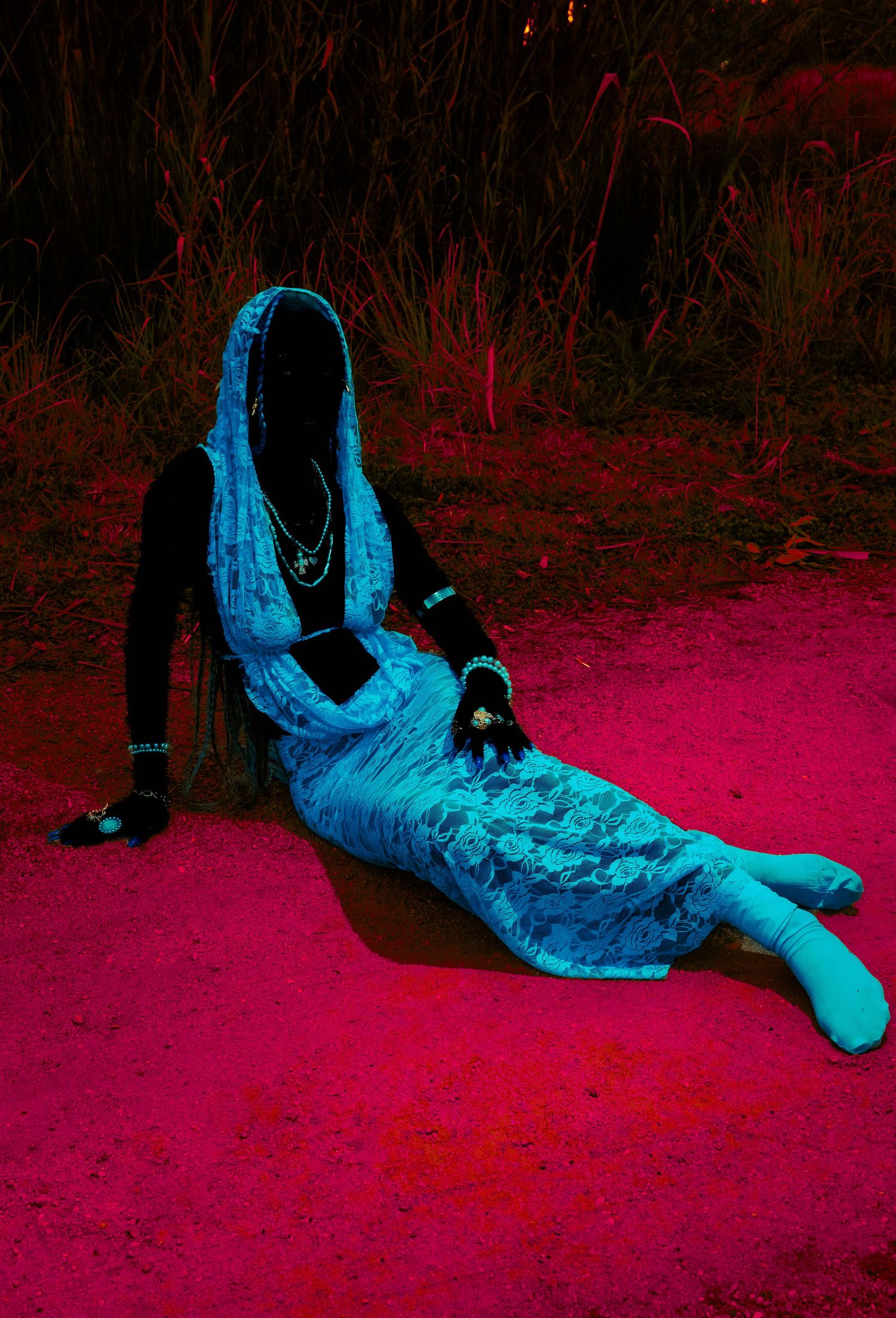
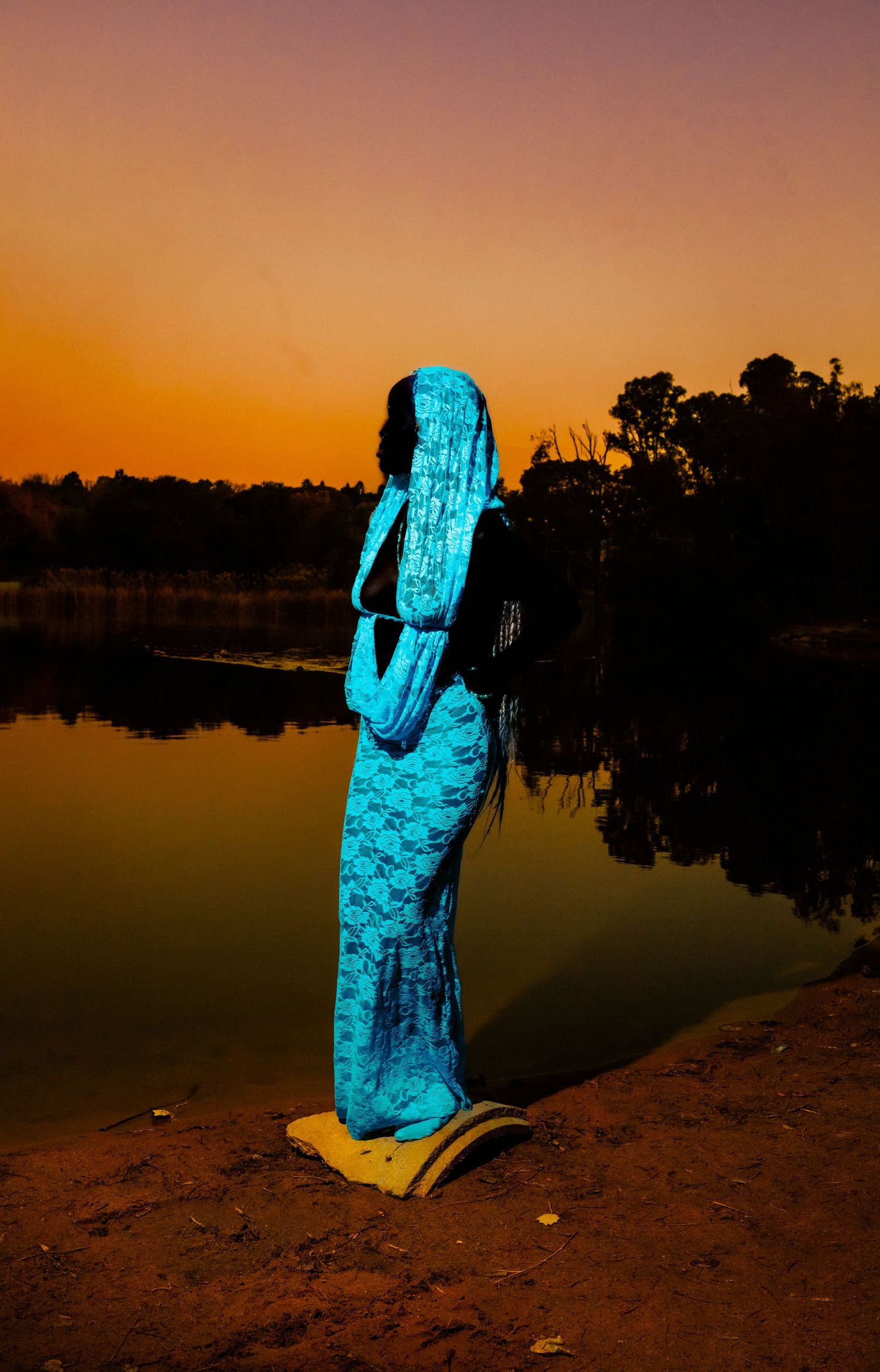
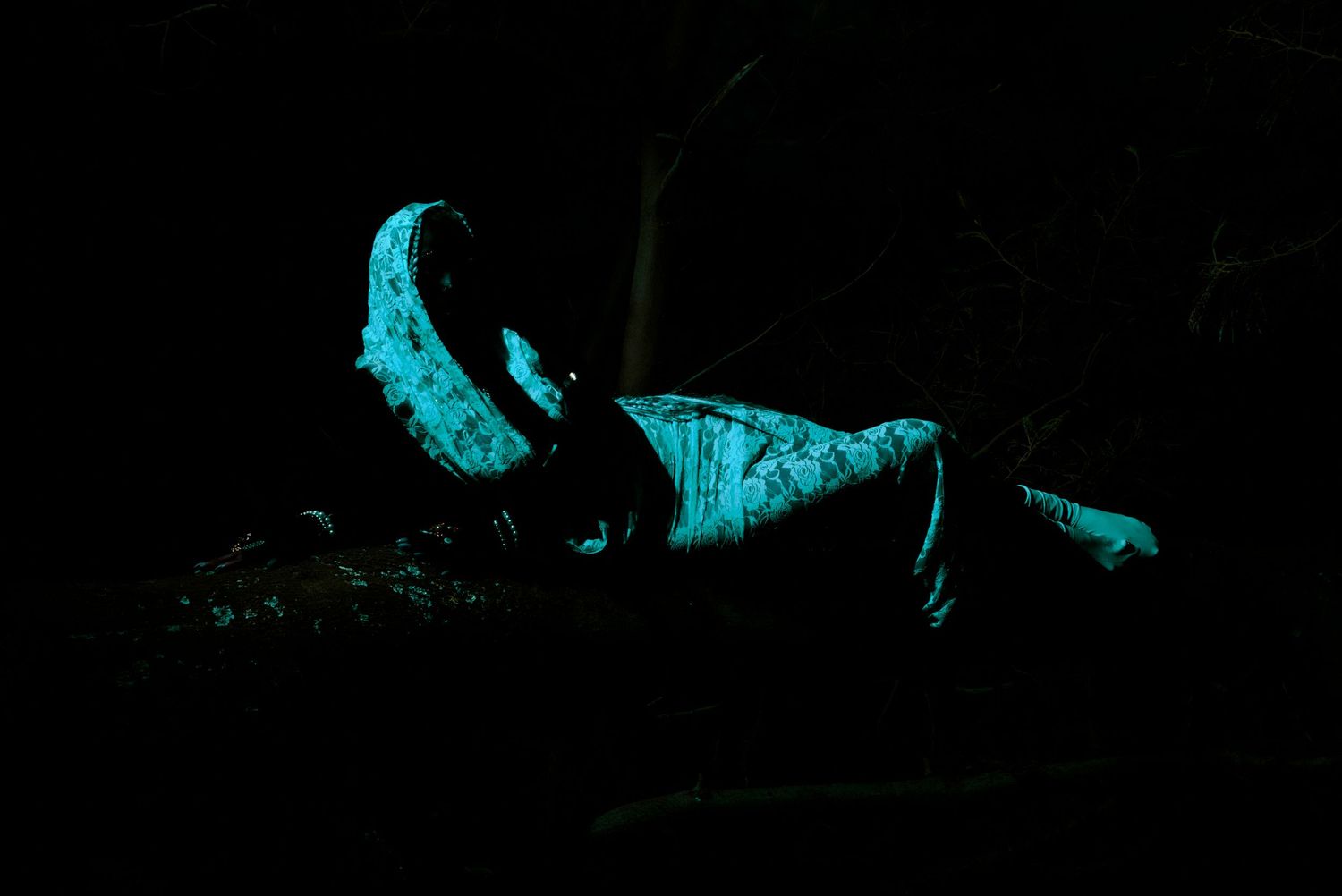
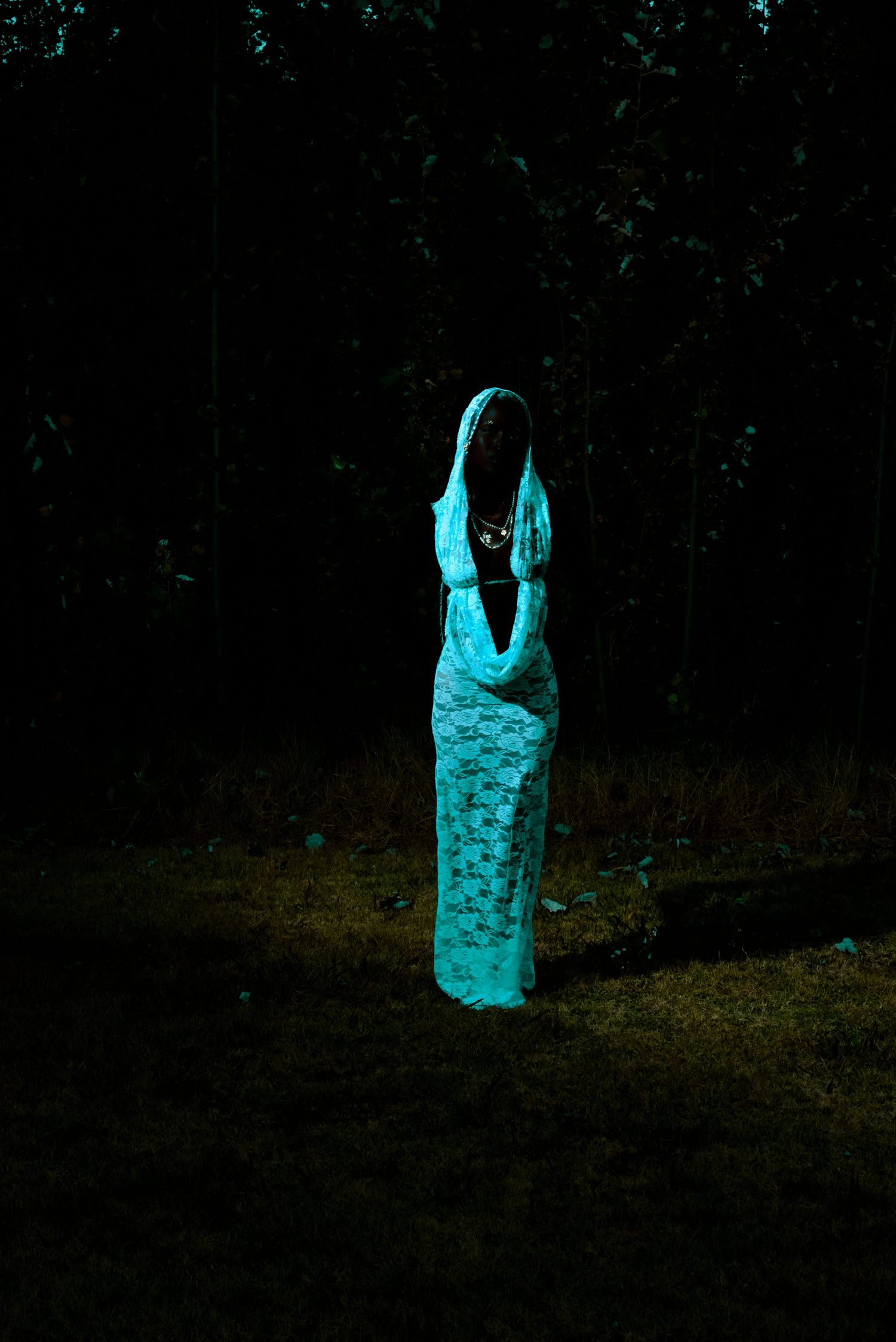
The figure appears suspended between states neither fully revealed nor entirely concealed. Draped in a luminous garment that shifts in relation to its surroundings, the body moves through different conditions of light and environment. Across these moments, identity becomes fluid, less about definition and more about transition.
Time operates not as a measurable sequence, but as a felt presence. Each image carries a different register stillness, movement, emergence, withdrawal suggesting that transformation does not occur in a singular direction. Instead, it unfolds in fragments, repetitions, and returns.
Colour plays a critical role in shaping this experience. The tension between deep darkness and saturated tones introduces a dynamic where visibility is constantly negotiated. Light does not simply reveal the figure; it interacts with it, allowing the body to appear and recede across different frames. This interplay reflects a balance between control and surrender, where theory and intuition coexist.
At its core, the work reflects a process of becoming that cannot be forced or predetermined. It speaks to the act of relinquishing control trusting that through patience, attention, and time, a language will emerge that feels both unfamiliar and deeply personal.
Within Sedza Zwau, A God in a Form Never Given marks an expansion outward. It moves from introspection toward transformation, positioning the body not only as a site of reflection, but as something in the process of evolving into a form not yet fully known